10 Video Marketing Best Practices for Viral Growth in 2025
Discover 10 actionable video marketing best practices to boost engagement and ROI in 2025. Master short-form, long-form, and platform optimization.
In 2025, simply creating video content is no longer a viable strategy. Platforms like TikTok, YouTube Shorts, and Instagram Reels have fundamentally reshaped audience expectations, prioritizing specific formats and engagement signals that determine whether content succeeds or disappears. Many brands and creators fail because they apply a one-size-fits-all approach, resulting in low engagement, wasted budgets, and algorithmic invisibility. The critical gap between viral growth and digital silence is not a matter of luck; it is a matter of mastering the specific, technical fundamentals of modern video marketing.
Success now hinges on a strategic, data-driven methodology. This means moving beyond generic advice and implementing proven video marketing best practices that align with how people actually consume content today. It involves a deep understanding of everything from mobile-first composition and powerful three-second hooks to sophisticated post-production techniques that create a professional, polished final product. This guide provides a direct, actionable roadmap to navigate this complex environment effectively.
We will break down 10 essential best practices designed for immediate implementation. You will learn how to plan, create, and distribute both short-form and long-form video content that not only reaches your target audience but captivates and converts them. We will provide practical, platform-specific tips and explore how specialized tools, such as VideoBGRemover for instant background replacement, can dramatically accelerate your workflow, reduce production costs, and unlock new creative possibilities. Forget the guesswork and start building a video strategy that delivers measurable results.
1. Platform- and Mobile-Optimized Short-Form Content (Vertical-First, Mobile-First)
One of the most critical video marketing best practices today is designing content specifically for the platform where it will be viewed, prioritizing a mobile-first, vertical-first approach. This means abandoning the one-size-fits-all strategy of posting the same horizontal video across all social channels. Instead, you create content natively formatted for each platform’s user experience, which is overwhelmingly on a mobile device held vertically.
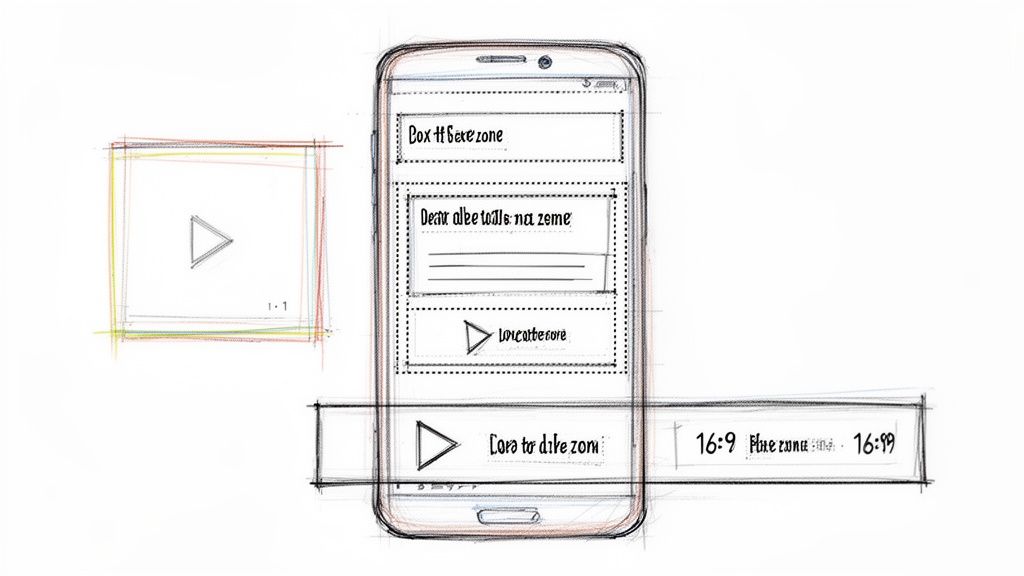
TikTok, Instagram Reels, and YouTube Shorts all favor a 9:16 aspect ratio. Videos shot or edited in this vertical format fill the entire screen, creating an immersive experience that significantly boosts engagement. Data shows that TikTok creators using native 9:16 videos see up to 3x higher completion rates, while vertical Instagram Reels can outperform horizontal imports by as much as 40%. The goal is to reduce friction and make your content feel like a natural part of the user's feed.
How to Implement a Vertical-First Strategy
Maximizing ROI doesn't mean tripling your production work. The key is to repurpose a single source video into multiple platform-specific versions.
- Keep Key Content Centered: When filming, frame your subject within the central 70% of the screen. This "safe zone" ensures that crucial visuals and text won't be cut off by platform UIs (like usernames, captions, or like buttons) on different devices.
- Adapt Graphics for Small Screens: Design all text overlays, logos, and graphics to be legible when viewed at arm's length on a phone. Use bold, clear fonts and high-contrast colors.
- Repurpose with Efficiency: Use tools that streamline the creation of multiple aspect ratios. For instance, after removing a background with a tool like VideoBGRemover, you can export the subject as a transparent PNG sequence. This allows you to easily place the clean footage onto different vertical (9:16), square (1:1), or horizontal (16:9) backgrounds without reshooting.
- Test Before Publishing: Always preview your final videos on an actual mobile device. This simple step helps you catch formatting errors or legibility issues that aren't apparent on a large desktop monitor.
By embracing a vertical-first workflow, you align your content with user behavior, leading to higher retention, better algorithm performance, and a more professional presentation.
2. Leverage Authentic User-Generated Content (UGC) with Professional Backgrounds
Another powerful video marketing best practice is to combine the authenticity of User-Generated Content (UGC) with a polished, professional aesthetic. This strategy involves using genuine customer testimonials, product reviews, and unboxing videos while digitally removing distracting real-world backgrounds. The result is content that builds immense trust through social proof, but also aligns perfectly with your brand's visual identity, all without the need for expensive studio shoots or green screens for your creators.

This hybrid approach delivers significant performance gains. Brands like Glossier saw 40% more engagement with their #GlossierGirl UGC campaigns compared to brand-produced content, while Facebook's own data shows that UGC-style ads can outperform standard branded ads by 3.5x. By removing a cluttered bedroom or kitchen background from a compelling testimonial, you focus the viewer's attention entirely on the creator's message and the product, enhancing credibility and professionalism simultaneously. A strong user-generated content strategy is essential for modern marketing.
How to Implement a UGC-First, Brand-Aligned Strategy
You can maintain authenticity while controlling the final visual output by guiding creators and using smart post-production tools.
- Provide a Simple Creator Brief: Ask creators to film in a well-lit space with clear audio and minimal movement. Let them use their natural environment, as the background will be removed later.
- Remove and Replace Backgrounds: Use a tool like VideoBGRemover to instantly remove cluttered backgrounds from UGC clips. Replace the original setting with a clean, on-brand color, a subtle branded graphic, or a relevant product shot.
- Batch Process for Efficiency: When running a large-scale UGC campaign, use tools that offer batch processing. This allows you to upload and process dozens of creator videos at once, standardizing their look and feel in minutes, not hours.
- A/B Test Backgrounds: Test different professional backgrounds against each other. You might find that a solid brand color converts better for Instagram ads, while a subtle office background performs better for LinkedIn content.
This method allows you to scale authentic video creation, reduce production costs, and ensure every piece of user content reinforces your brand identity.
3. Implement Attention-Grabbing Opens Within First 3 Seconds
Capturing viewer attention within the first three seconds is a non-negotiable video marketing best practice for modern social platforms. In a feed where users can scroll past dozens of videos in a minute, your content's opening frames must provide an immediate reason to stop. This initial hook, whether it's a compelling visual, a bold question, or a surprising "pattern interrupt," determines whether a viewer engages or moves on.

Creators like MrBeast have mastered this by engineering openings that deliver a powerful visual promise or an unexpected edit right away, achieving near-perfect retention in the crucial first few seconds. Similarly, successful product ads on Instagram Reels often open with a split-screen "before and after" shot, instantly communicating the value proposition. The goal is to eliminate any slow build-up and get straight to the core benefit or intrigue.
How to Create an Irresistible Opening
A strong hook doesn't require a Hollywood budget, just a strategic approach to visual and narrative structure.
- Lead with the Climax or Benefit: Instead of a traditional narrative arc, show the most visually satisfying or beneficial part of your video first. For a recipe video, show the delicious finished dish; for a tutorial, show the final successful result.
- Use Motion and Quick Cuts: Start with dynamic motion or a series of rapid-fire edits to create a pattern interrupt. This technique breaks the hypnotic state of scrolling and signals to the viewer that your content is energetic and engaging.
- Create Dynamic Visual Overlays: A powerful way to craft a unique hook is by isolating your subject from its original background. Using a tool like VideoBGRemover, you can export your subject with a transparent background and place it over a custom, attention-grabbing graphic, gradient, or even looping video footage that immediately stands out in the feed. This is especially effective for product demos and tutorials. Learn more about how this applies to specific platforms in these YouTube Shorts best practices.
- Ask a Question with Text: Open with a bold, on-screen text overlay that poses a question your target audience wants answered (e.g., "Tired of X?"). This immediately qualifies your viewer and promises a solution.
By front-loading your video with its most compelling element, you drastically increase the likelihood of holding viewer attention past the three-second mark, giving your message a chance to land.
4. Add Strategic Text Overlays and Captions for Audio-Off Viewing
A crucial component of modern video marketing best practices is designing for sound-off consumption. With a vast majority of social media videos being watched on mute, relying solely on audio to convey your message means losing a massive segment of your audience. Strategic text overlays and captions bridge this gap, ensuring your video is engaging, accessible, and fully understandable even in complete silence.
This goes beyond simple auto-generated captions. It involves integrating on-screen text as a core creative element to guide the viewer's attention, highlight key points, and drive action. Data backs this up: TikTok videos with integrated captions see up to 80% higher engagement, and tutorial videos with step-by-step text overlays can achieve double the average watch time. By making your content accessible without sound, you cater to user habits and significantly improve performance metrics.
How to Implement Strategic Text and Captions
Integrating text effectively requires a balance between providing information and maintaining visual clarity. The goal is to enhance the video, not clutter it.
- Keep Text Concise and Legible: For mobile readability, limit on-screen text to 5-10 words per line. Use bold, high-contrast colors (like white text on a dark overlay) to ensure your message stands out against any background.
- Use the "Safe Zone": Position all critical text, especially calls-to-action (CTAs), within the central part of the screen. This prevents it from being obscured by platform interface elements like usernames, like buttons, or progress bars.
- Enhance Text Readability with Clean Backgrounds: When a background is too busy, text can become unreadable. Use a tool like VideoBGRemover to isolate your subject and place it on a simpler, solid-color, or gradient background. This creates a clean canvas where your text overlays pop, dramatically improving legibility.
- Time Your Captions for Impact: Don't just transcribe your video. Add text overlays to coincide with key moments, such as a product reveal, an important tip, or a final CTA. Use a contrasting color or a boxed highlight for your primary CTA to make it unmissable.
- Test on Mobile: Before publishing, always preview the final video on a smartphone. This simple check ensures your text is sized correctly, easy to read, and not cut off on the device where most people will see it.
5. Use Transparent Backgrounds and Chroma-Key Effects for Professional Polish
One of the most powerful video marketing best practices for achieving a high-end look without a complex studio setup is leveraging transparent backgrounds. This modern, AI-driven approach mimics traditional chroma-keying (green screen) but eliminates the need for physical equipment. By digitally removing the background from your footage, you create a versatile asset that can be placed over any new backdrop, motion graphic, or video layer, providing immense creative flexibility and a professional finish.
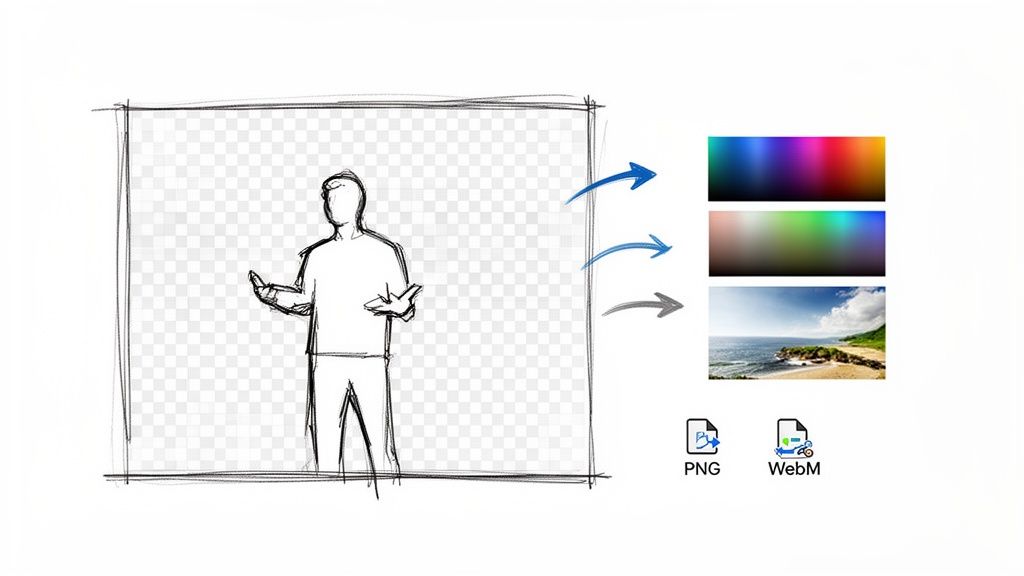
This technique is invaluable for content creators who need to maintain a consistent brand identity or adapt a single video for multiple campaigns. For instance, a product demonstrator can record a video once and then instantly A/B test different backgrounds to see which resonates best with their audience. Similarly, a webinar presenter can remove a cluttered home office background and replace it with a clean, branded graphic, instantly elevating the perceived production value. You can learn more about how an AI video background remover can streamline your workflow and enhance your content.
How to Implement Transparent Backgrounds in Your Videos
Integrating this technique into your workflow is efficient and unlocks new creative possibilities, especially with the right tools.
- Prioritize Good Lighting: Shoot your source video with even, consistent lighting on the subject. This helps the AI accurately distinguish the foreground from the background, resulting in a cleaner, more precise cutout.
- Use the Right Tools: Utilize a dedicated tool like VideoBGRemover to automatically process your footage. This avoids the manual, time-consuming process of rotoscoping in traditional editing software.
- Choose the Best Export Format: For maximum flexibility in post-production software like Adobe After Effects or Premiere Pro, export your video as a PNG sequence with a transparent alpha channel. For web use, a transparent WebM (VP9) file offers great quality with a smaller file size.
- Integrate Brand Elements: Replace the original background with your brand's colors, a subtle motion graphic, or a professional stock video. This reinforces your visual identity and creates a cohesive look across all your video content.
- Batch Process for Efficiency: If you're creating a series of videos, like for a training course or social media campaign, use batch processing features to remove the backgrounds from multiple clips at once, saving significant production time.
6. Create Series and Sequential Content for Audience Retention and Algorithmic Favor
One of the most powerful video marketing best practices for building a loyal audience is to create episodic or sequential content. Instead of one-off videos, a series creates a compelling reason for viewers to return, subscribe, and engage over the long term. This strategy builds narrative tension and establishes a predictable viewing habit, signaling to algorithms that your content is valuable and worth promoting.
Series content transforms passive viewers into an active community. For example, educational channels like Crash Course report that viewers who complete a series are over 40% more likely to subscribe. Similarly, recurring formats, like MrBeast's challenge videos, create a consistent brand that audiences recognize and anticipate, driving incredible repeat viewership and higher average watch times. The goal is to make your content a scheduled part of your audience's media consumption.
How to Implement a Content Series Strategy
Creating a successful series requires planning and consistency, but it pays significant dividends in audience growth and retention. The key is to establish a recognizable format that is easy to replicate.
- Plan a Multi-Episode Arc: Structure your series with a minimum of 5-10 episodes. This provides enough content for algorithms to recognize a pattern and gives audiences a substantial reason to subscribe for future installments.
- Establish Consistent Branding: Use a recurring visual identity across all episodes. This includes a consistent opening animation, color scheme, graphic overlays, and thumbnail style. This visual cohesion makes your series instantly recognizable in a crowded feed.
- Maintain a Consistent Appearance: For host-led videos, maintaining a consistent look and feel is crucial, even when filming on different days. You can batch-record episodes in one session or use a tool like VideoBGRemover to replace your background. This ensures every video has the same professional, branded backdrop, reinforcing series continuity.
- End with a Strong Call-to-Action: Conclude each episode with a clear prompt to watch the next video or subscribe for the upcoming one. Use on-screen end cards, verbal cues, and links in the description to guide viewers deeper into your content ecosystem.
- Release on a Predictable Schedule: Publish your episodes on the same day and time each week or bi-weekly. This consistency trains your audience to anticipate new content, turning casual viewing into a regular habit.
7. Implement Clear Calls-to-Action (CTAs) with Strategic Timing and Placement
One of the most crucial video marketing best practices for driving results is to guide your audience on what to do next. A video without a clear call-to-action (CTA) is a missed opportunity, as it leaves viewers engaged but without direction. Strategic CTAs tell your audience exactly what action to take (e.g., subscribe, click a link, comment) and are placed at the moments when their interest and emotional investment are at their peak.
Effective CTAs are not just an afterthought tacked onto the end of a video. Data shows that timing is everything. For example, product demo videos with a CTA placed precisely at the moment of purchase consideration can see conversion rates increase by up to 35%. Similarly, tutorial videos that feature mid-roll CTAs achieve 25% higher engagement than those with end-roll CTAs alone. The goal is to make the desired action feel like a natural and compelling next step in the viewer's journey.
How to Implement Strategic CTAs
Integrating effective CTAs requires a blend of psychology, timing, and visual design. It's about prompting action when the viewer is most receptive.
- Time Your CTA for Peak Engagement: Identify the moment of highest value in your video, such as a key insight, a product reveal, or an emotional high point. Place your primary verbal and visual CTA here. For instance, YouTube creators often see subscription rates jump 18% higher when they ask for a sub at the video's halfway mark.
- Be Specific and Value-Driven: Vague commands like "Click here" are less effective. Instead, clearly state the benefit. Use specific language like, "Subscribe for weekly tutorials" or "Click the link in bio for a free template."
- Use Visuals to Emphasize the Action: Make your CTA impossible to miss. Use bold, contrasting colors for on-screen text and buttons. You can also leverage tools to create dedicated space for your CTA. For example, using VideoBGRemover allows you to place a subject against a custom-branded background with a prominent, non-obtrusive area designated for your "Visit our website" text.
- Vary CTA Placement in Longer Videos: For content over two minutes, don't save your only CTA for the end. Incorporate 2-3 CTAs: one near the beginning (e.g., "Watch until the end to see the final result"), one at the peak engagement point, and one in the final few seconds.
By mastering the art of the CTA, you transform passive viewers into active participants, subscribers, and customers.
8. Repurpose Content Across Multiple Platforms and Formats for Maximum ROI
One of the most efficient video marketing best practices is to adopt a content repurposing model to maximize your return on investment. Instead of creating unique videos for every channel from scratch, this strategy involves producing a single, comprehensive "pillar" piece of content, such as a webinar, an in-depth tutorial, or a podcast episode, and then strategically breaking it down into numerous smaller assets tailored for different platforms. This approach dramatically reduces production costs and effort while amplifying your message across a wider audience.
The data supports this "create once, distribute many" philosophy. Creators who break down a single long-form YouTube video into 10 or more TikTok clips can see up to an 8x increase in audience reach. Similarly, a product demo video adapted for Reels, YouTube Shorts, and Pinterest can result in a 12x higher click-through rate compared to a single-platform release. The goal is to meet your audience where they are with content formatted for their preferred consumption habits, all stemming from a single production effort.
How to Implement a Content Repurposing Strategy
Effective repurposing requires planning from the initial creation stage to ensure your source content is versatile.
- Create with Repurposing in Mind: Film your pillar content in segments or "chapters." Structure your video around distinct topics or key points that can be easily extracted as standalone, cohesive clips for short-form platforms.
- Isolate Subjects for Customization: When creating clips, use tools to remove the original background. A tool like VideoBGRemover can isolate your subject from its environment, allowing you to place it onto branded backgrounds, motion graphics, or stock footage suitable for each specific platform’s aesthetic.
- Batch Process for Efficiency: Export multiple versions of your clips in different aspect ratios simultaneously. A vertical 9:16 for TikTok and Reels, a square 1:1 for LinkedIn feeds, and a horizontal 16:9 for YouTube can all be generated from the same source clip, saving significant editing time.
- Maintain Brand Consistency: While the format changes, your branding should not. Ensure your logo, brand colors, and font styles are consistently applied across all repurposed assets to build brand recognition.
- Track Performance Separately: Schedule your adapted content strategically across platforms and monitor the analytics for each one individually. This will reveal which formats and channels resonate most with your audience, informing future content decisions.
By repurposing content, you transform one video shoot into a sustained multi-channel campaign, ensuring every bit of creative energy delivers maximum impact.
9. Build Community Through Engagement and Authentic Interaction
One of the most powerful video marketing best practices is shifting focus from passive viewership to active community participation. This means creating content that intentionally invites conversation, shares, and user-generated responses. Engagement signals like comments and shares are algorithmic gold, but more importantly, they transform casual viewers into a loyal, invested audience that advocates for your brand.
Creators who consistently reply to comments often see up to 30% higher engagement on their next videos, as their audience feels seen and valued. Similarly, videos structured around questions, polls, or challenges can double the comment rate compared to passive, statement-only content. The goal is to create a two-way dialogue, not a one-way broadcast. For a comprehensive perspective on cultivating a loyal audience beyond initial views, delve into best practices for building thriving online communities.
How to Foster Authentic Interaction
Building a community requires a deliberate and consistent strategy for encouraging and rewarding engagement. It’s about making your audience feel like part of the creative process.
- Ask Direct Questions: End your videos with a clear call-to-conversation. Simple prompts like, "What's your take on this?" or "Tell me your experience in the comments" give viewers a specific reason to engage.
- Create "Reply to Comments" Videos: Acknowledge and feature user comments in follow-up videos. This validates their contribution and encourages others to comment for a chance to be featured.
- Launch User-Generated Content (UGC) Challenges: Create a trend or challenge that encourages your audience to make their own videos in response. This strategy, popular on TikTok, can generate 5-10x more reach through UGC.
- Prioritize a Quick Response Time: Aim to respond to the first 20-50 comments within the first hour of posting. This early interaction boosts the video's momentum in the algorithm and sets a welcoming tone.
- Streamline Reaction Content: Use a tool like VideoBGRemover to quickly film response videos. By removing the background, you can easily place yourself alongside a user's comment or video, maintaining a consistent and professional look without a complex setup.
By actively cultivating interaction, you build a resilient community that remains engaged long after the initial view count fades.
10. Use Data-Driven A/B Testing and Analytics Optimization for Continuous Improvement
One of the most powerful video marketing best practices is shifting from guesswork to a systematic process of testing and optimization. This means methodically A/B testing different video elements like thumbnails, titles, hooks, and calls-to-action, then using analytics to identify what truly resonates with your audience. This data-driven approach allows you to make incremental improvements that compound into significant gains over time.
Instead of creating content based on assumptions, you form a hypothesis, test it, and let the data guide your next steps. For example, creators who systematically test thumbnail variations often see click-through-rate (CTR) improvements of 15-30%. Similarly, A/B testing the first three seconds of a video can yield a 25% average increase in completion rates because you’ve optimized the hook that keeps viewers watching.
How to Implement Data-Driven Optimization
A structured testing framework ensures your efforts are measurable and impactful. Start with high-impact variables before moving to smaller details.
- Test One Variable at a Time: To get clean data, isolate your tests. If you want to know which thumbnail performs better, don't change the title simultaneously. Test high-impact elements first, such as thumbnails, then titles, then opening hooks.
- Use Tools for Rapid A/B Testing: You can quickly test creative elements without a full reshoot. For instance, using a tool like VideoBGRemover allows you to place the same core footage against different backgrounds. This lets you A/B test if a solid color, a dynamic office setting, or a branded graphic background performs better for the same script.
- Analyze Key Performance Metrics: Focus on metrics that align with your goals. Track CTR for thumbnails and titles, audience retention curves to identify drop-off points, and conversion rates for your CTAs. Wait for a statistically significant sample size, like 100-200 views, before declaring a winner.
- Document and Iterate: Keep a simple spreadsheet of every test you run, including the variable, the results, and your key takeaways. This historical data helps you identify broader patterns and build a library of what works for your specific audience. For those focused on short-form content, understanding competitor strategies on platforms like TikTok is paramount. Learn more about how to improve your data-driven approach by exploring resources like this guide on using spy tools for TikTok ads).
By embracing continuous testing and analysis, you turn video marketing into a science, ensuring every piece of content you produce is more effective than the last.
10-Point Video Marketing Best Practices Comparison
| Strategy | Implementation Complexity 🔄 | Resource Requirements ⚡ | Expected Outcomes 📊 | Ideal Use Cases 💡 | Key Advantages ⭐ | Key Tradeoffs |
|---|---|---|---|---|---|---|
| Platform- and Mobile-Optimized Short-Form Content (Vertical‑First, Mobile‑First) | Medium‑High — multiple aspect exports and compositions | Moderate — editing tools, device testing, templates | Higher engagement, completion, and shareability on mobile | Reels, TikTok, Shorts, social-first promos | ⭐ Native-format boosts completion and reduces algorithm suppression | Requires multiple versions; can limit cinematic framing |
| Leverage Authentic User‑Generated Content (UGC) with Professional Backgrounds | Low‑Medium — collect UGC + background replacement workflow | Low — UGC sourcing, background‑removal tool, moderation | Increased trust and conversions with lower production cost | Testimonials, product reviews, social ads | ⭐ Authenticity with professional polish, cost savings | Quality variance; needs volume and QC |
| Implement Attention‑Grabbing Opens Within First 3 Seconds | Medium — editing skill and pacing control | Low‑Moderate — motion assets, quick cuts | Significant lift in retention and algorithmic ranking | Short‑form ads, hooks, promos, viral content | ⭐ Immediate retention uplift and higher CTRs | Overuse can feel gimmicky; requires testing |
| Add Strategic Text Overlays and Captions for Audio‑Off Viewing | Low‑Medium — captioning + layout work | Low — captioning tools, typography/design | Better accessibility, +45–50% engagement and SEO benefits | Mobile feeds, tutorials, muted viewing environments | ⭐ Accessibility + discoverability; works cross‑platform | Can clutter frame; mobile sizing challenges |
| Use Transparent Backgrounds and Chroma‑Key Effects | Medium — export/compositing workflow and formats | Moderate — editing software that supports alpha formats | Professional, flexible assets and fast A/B background testing | Overlays, webinars, motion design, streaming | ⭐ No green screen needed; high compositing flexibility | Dependent on lighting; artifacts possible in complex scenes |
| Create Series and Sequential Content for Retention | High — planning, narrative arcs, scheduling | Moderate‑High — consistent production and asset reuse | Higher lifetime viewer value, subscriptions, binge behavior | Educational courses, recurring formats, challenge series | ⭐ Algorithmic favor and reusable assets reduce per‑video cost | Requires long‑term commitment; risk if series ends early |
| Implement Clear Calls‑to‑Action (CTAs) with Strategic Timing | Low — copywriting + timing decisions | Low — design for CTA emphasis and testing | Increased subscriptions, clicks, and conversions | Product demos, tutorials, longer videos | ⭐ Direct, measurable lift in conversions when timed well | Over‑aggressive CTAs can reduce watch time |
| Repurpose Content Across Multiple Platforms and Formats | Medium — repurposing workflows and templates | Moderate — editing, asset management, batch tools | 5–10x ROI improvement and broader audience reach | Webinars, long‑form videos, courses to short clips | ⭐ Efficient scale; significantly reduces marginal cost | Risk of message dilution; needs planning |
| Build Community Through Engagement and Authentic Interaction | Medium — ongoing engagement processes | High — time for moderation, replies, community management | Strong loyalty, organic reach, higher long‑term value | Creator channels, challenge trends, Q&A formats | ⭐ Deep audience relationships and organic growth | Time‑intensive; moderation and slower initial growth |
| Use Data‑Driven A/B Testing and Analytics Optimization | Medium‑High — testing framework and hypothesis cycles | Moderate — analytics tools, sufficient sample sizes | Incremental, compounding performance improvements | Channels focused on growth, CRO, marketing optimization | ⭐ Evidence‑based gains; reduces guesswork | Requires volume/time for significance; may miss qualitative insights |
From Best Practices to Best Performance
Navigating the dynamic landscape of modern video marketing can feel overwhelming, but mastering it is more achievable than ever. The journey from initial concept to high-performing content is not about finding a single magic bullet. Instead, it’s about consistently applying a strategic framework built on proven principles. The ten video marketing best practices we've explored provide a comprehensive roadmap to not just create videos, but to build a powerful engine for audience growth, engagement, and conversion.
This framework begins with a fundamental shift in perspective: creating for the platform and the viewer first. By adopting a vertical-first, mobile-first mindset (Practice #1), you meet your audience where they are, in the format they prefer. This user-centric approach is amplified when you leverage authentic, relatable User-Generated Content, elevating it with professional backgrounds to build trust and credibility (Practice #2).
The Core Tenets of Engagement and Retention
At its heart, successful video marketing is a conversation. You earn the right to continue that conversation by capturing attention immediately with a powerful 3-second hook (Practice #3) and making your content universally accessible with strategic text overlays and captions for silent viewing (Practice #4). These elements are no longer optional; they are essential for competing in a crowded feed.
Once you have their attention, the goal shifts to retention and recurring engagement. Building content series (Practice #6) and fostering a genuine community (Practice #9) transforms passive viewers into loyal followers. This strategy not only pleases the algorithm but also creates a dedicated audience eagerly awaiting your next upload. The key is to deliver value consistently and make viewers feel seen and heard.
Driving Action and Maximizing Your ROI
Creating great content is only half the battle. To see a tangible return on your investment, you must guide your audience toward a specific goal. Implementing clear, well-timed Calls-to-Action (Practice #7) is crucial for turning views into leads, sales, or subscribers. You can further maximize the value of every video by strategically repurposing content across multiple platforms (Practice #8), extending its reach and lifespan without multiplying your workload.
This entire process is underpinned by a commitment to continuous improvement. Relying on data-driven A/B testing and analytics (Practice #10) removes the guesswork from your strategy. It allows you to understand precisely what resonates with your audience, enabling you to refine your approach and consistently improve performance over time.
Ultimately, the most effective video marketing best practices are the ones you can execute efficiently and creatively. Tools that streamline complex technical tasks, like creating transparent backgrounds for polished product shots or chroma-key effects (Practice #5), are no longer just a luxury; they are a competitive advantage. They give creators, marketers, and editors the agility to test ideas rapidly, maintain a high standard of quality, and focus on what truly matters: connecting with their audience through compelling stories. By integrating these ten principles into your workflow, you’ll be well-equipped to turn your video marketing efforts from a series of individual tactics into a cohesive, results-driven strategy.
Ready to elevate your content and implement these best practices with ease? VideoBGRemover gives you the power to create professional, polished videos by removing and replacing backgrounds in seconds, no green screen required. Streamline your workflow, enhance your creative flexibility, and start producing high-impact content today at VideoBGRemover.
Tagged with
Ready to Remove Your Video Background?
See a free preview before you buy.
No credit card required • Free preview on every video